
Electrical Rewiring
Every home has an electrical system consisting of cables, outlets, panels, sockets, and light fixtures. This system ensures that every room in the house has access to electricity.
Electrical rewiring includes rewiring the electrical system in your home due to various factors, including its age, safety reasons, or malfunctioning. Electricity is used on a daily basis, so the electrical wiring in your house needs to be in good condition. If there are any signs of damage or wear and tear, it should be replaced as soon as possible. Although house rewiring may seem overwhelming and expensive, it is much cheaper and safer than the risk of your home bursting into flames due to damaged wiring.
If you are having problems with your home’s wiring, give Russo Electrical a call! We’ll be able to diagnose any issues quickly and get your home rewired as soon as possible so it has a safe electrical system.
Continue reading to learn more about the electrical rewiring process.
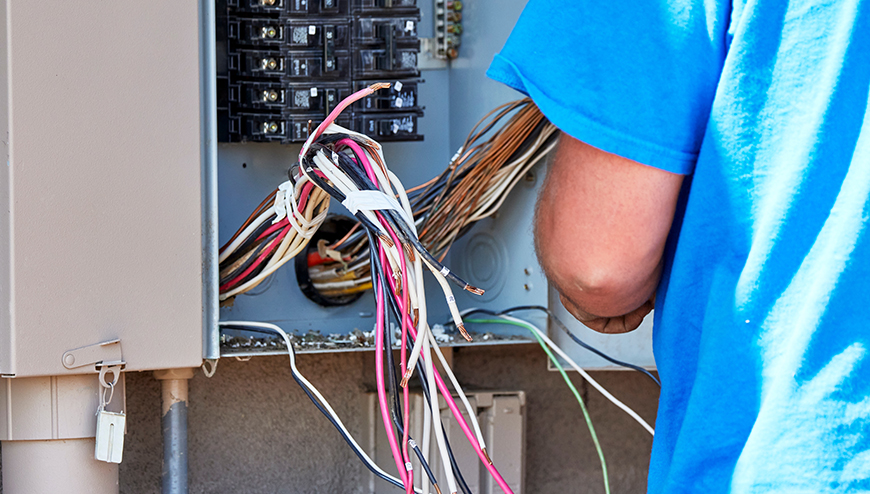
What is Rewiring?
Rewiring is a complex task that involves replacing the electrical wiring in a home, including the wiring, outlets, sockets, panels, and light fixtures. It's an extensive job that often requires drilling walls and pulling up floors, making it crucial to enlist the expertise of a professional electrician.
Rewiring involves two parts. The first involves replacing the wiring, cables, and circuits, while the second involves installing sockets, switches, and light fixtures.
What is Included in a House Rewiring?
Some of the things that will be done during a house rewiring include:
- Replacing all the wiring
- Installing a new switchboard and meter box
- Replacing and rewiring light fixtures
- Installing black boxes to switches and sockets
- Installing new electrical outlets and sockets
How Do You Know That Your Home Needs Rewiring?
Some of the warning signs that your home needs to be rewired include:
- Flickering or dimming lights: These are the most common signs that your home needs rewiring. If you notice your lights flickering or dimming, it means that there are issues with the voltage levels your lights are receiving (flickering lights get too much voltage, while dimming lights don't receive enough).
- Buzzing sounds from electrical outlets: If you hear buzzing sounds coming from your electrical outlets, it means that your wiring may be malfunctioning and could pose a fire hazard.
- Fuses and circuit breakers blowing: Modern appliances require more electrical energy. If your fuses and circuit breakers keep crashing, it's a clear sign that your wiring needs to be updated to a more modern system.
- Burnt and discoloured outlets: If your electrical switches and outlets look burnt, there is faulty wiring close to the outlet, which can pose a fire risk.
- Electrical shocks: If you receive a small electrical shock when touching an electrical cord, it's time to call your local electrician.
- Burning smell: If your home has a constant burning smell, it could be caused by an electrical short near your electrical switches or behind your walls.
- Burnt lightbulbs: If you notice your lightbulbs burning out much more frequently than usual, it is a sign of fluctuating voltage levels and an issue with your home's wiring.
- Sparks in outlets: If you hear a hissing or crackling noise when plugging in or removing a cord, it means that there are loose or corroded connection points.
- Tripping circuit breakers: Circuit breakers are safety devices that protect electrical circuits from high voltages of electricity. However, if your circuit breaker keeps tripping, there's an issue with your electrical wiring.
- Age: If you live in a home that is over 30 years old, its wiring is more likely to be degraded, and it is at a higher risk of electrical fire or damage.
- Pest issues: If you have rodent problems, it's best to get your electrical wiring checked, as rats and mice tend to chew on wires and damage them.
- Colour of your wiring: Older wiring is black, while newer wiring is white or grey.
The Benefits of Rewiring Your Home
Although house rewiring can be timely and expensive, there are many short and long-term benefits, including:
- Safer home: Rest easy, knowing your home is safe from the risk of electrical fires and any electrical faults.
- More energy efficient: Modern light fixtures and appliances make your home more energy efficient.
- Homeowner's choice: As the homeowner, you can choose what light fixtures you want and the position of electrical sockets and outlets (USB electrical outlets next to the bed for charging your phone).
- Increased property value: A recently rewired home automatically increases its property value. The home is not only fitted with modern light fixtures and electrical sockets but it is also guaranteed to be safe from the risk of electrical fires.
- Legal compliance: All residential homes in Australia must abide by the Australian Wiring Rules (Electrical Installations).
VIR Cabling (Cotton Cabling)
VIR cables (Vulcanised Indian Rubber) were installed in thousands of homes across Australia from the early 1900s to the 1950s. They are made from tinned conductors and a rubber covering. Cotton is placed over the rubber covering to protect the conductor from moisture. The rubber is mixed with sulphur and heated so it hardens, which is why it is referred to as ‘vulcanised.’
Nowadays, the risks associated with VIR cabling are well known, and it is no longer used in homes built after the 1950s. These risks include:
- Exposed wires: Live electrical wires become exposed when the VIR cabling breaks down.
- Increased risk of fires and electrocution: Increased risk of fires, electric shocks and electrocution, which can cause serious harm to you, your family and your home.
- Inconsistent power flow: Older VIR cabling can result in inconsistent power flow, which means your electrical appliances may not run well.
- No earth wire: VIR cabling does not have an earth wire, which protects your electrical appliances and prevents live wires from overloading.
Signs that your VIR cabling may be playing up include:
- Flickering or dimming lights
- Sparks
- Burning smells
- Electrical appliances that are warm or hot to the touch
- Repeated tripping of circuit breakers
- Any other unusual smells or noises
If your home was built before the 1950s and you notice any of these worrying signs, call a licensed electrician as soon as possible and switch off the circuit breaker. Damaged VIR cabling can cause serious damage, so it’s best not to waste any time before contacting the professionals.
Your electrician will be able to safely rewire the VIR cabling and replace it with modern electrical wiring, which is much safer. We will also replace your old electrical power points.
The Cost of Rewiring Your Home
Every home is different, and so the cost of rewiring your home depends on a few main factors, including:
- The size of your home
- The number of levels (one-storey, two-storey or three-storey, etc.)
- Home material (brick, timber, fibro, etc.)
- Number of appliances
- The age of your home
- Number of light fixtures
- Number of power points
- Ease of access
- How complex your wiring system is
- The location of your home (homes in rural areas may be more expensive)
If you think your home may need rewiring, do not hesitate to contact Russo Electrical! Because much of your home's electricity may be hidden behind walls and under floors, it can be hard to see the damage, which is why it's best to contact the professionals.
We will come out to your home and thoroughly assess the electrical wiring to give you peace of mind. We are reliable, friendly and punctual, and you can count on us to fix any electrical problems promptly and efficiently.
FAQs
If you notice any of these signs, we recommend calling Russo Electrical as soon as possible so we can come out and assess your home for you.
You will be without electricity during this time, so it’s a good idea to make alternative accommodation arrangements.
Electrical wiring involves installing a new switchboard and meter, replacing the wiring in the home, installing new sockets and switches, rewiring and replacing light fixtures, and installing fixtures for TVs and other appliances.
- 6 dagonet street strathmore, Victoria, 3041
- steve.j.c@outlook.com
- 0409 122 455